Beyond the Lowest Bid: Why Value, Not Price, Wins Tenders
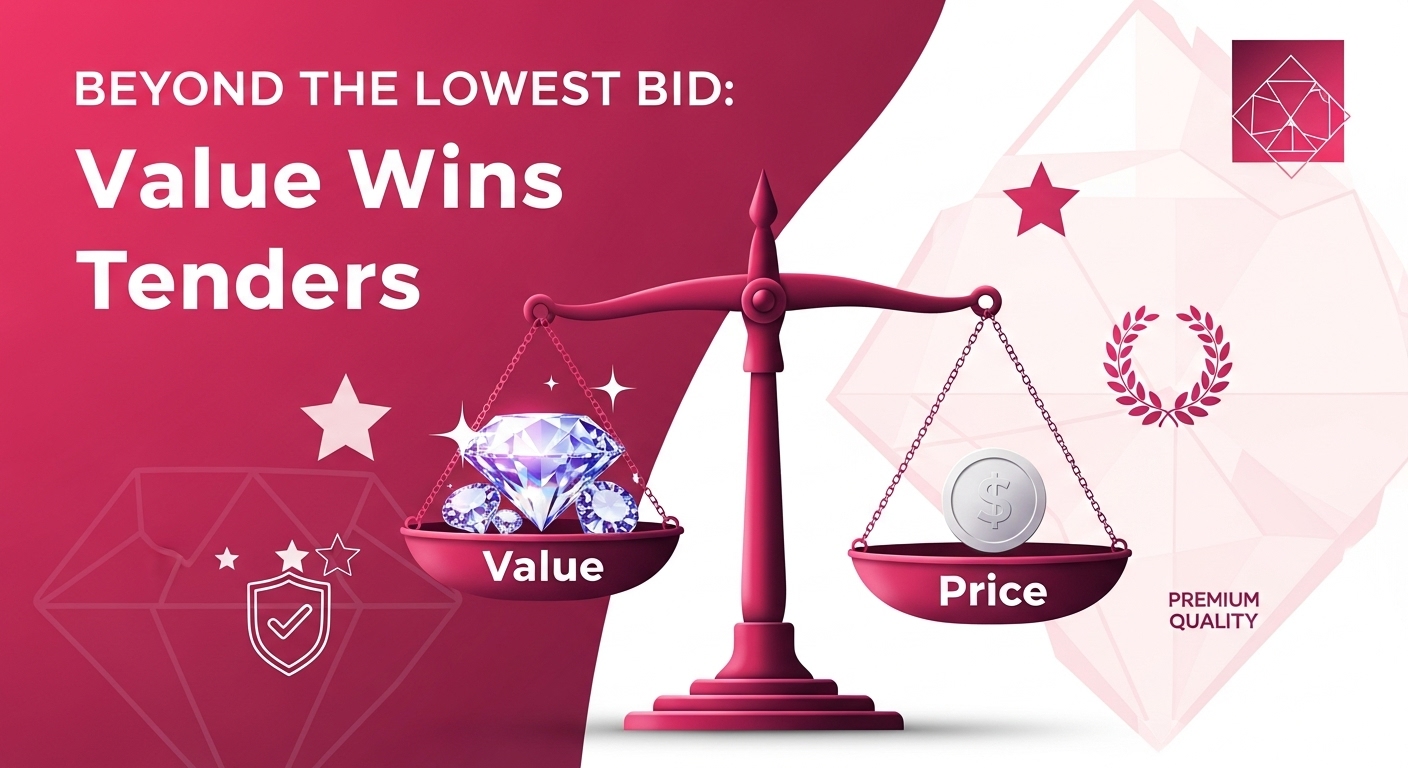
Australian businesses eyeing government contracts often wonder if the lowest price always secures the deal. In reality, government agencies across Australia have long moved “beyond the lowest bid” model, instead seeking true value for money when awarding tenders—balancing cost with quality, capability, innovation, and compliance to deliver lasting outcomes.
Understanding Value for Money in Tenders
When the government evaluates tenders, “value for money” serves as the guiding principle. This concept considers the total benefits and costs across the entire lifecycle of the good or service, not just the upfront price tag. The aim is to secure the best outcome, factoring in quality, risk management, timelines, sustainability, and local economic benefits alongside price.
Key elements assessed in value for money include:
- Capability and proven experience of the supplier
- Quality, fit-for-purpose solutions
- Whole-of-life costs, including maintenance and disposal
- Environmental, social, and local community impacts
- Ability to manage risks and deliver within required timelines
For example, a supplier may be more expensive but offer robust quality controls, highly skilled personnel, and innovative project management techniques that guarantee smoother delivery and fewer future issues.
What Gets Evaluated in Government Tenders?
Tenders are evaluated against clear, published criteria, usually shared within the tender documents. Common evaluation criteria and their relative weightings can include:
| Evaluation Criteria | Typical Focus Areas |
|---|---|
| Price | Total cost of purchase and ongoing expenditures |
| Technical Expertise | Experience, relevant skills, project knowledge |
| Methodology | Approach, clarity, and innovation in delivery |
| Resources & Capacity | Staff, technology, and financial stability |
| Quality & Fit-for-purpose | Meeting or exceeding specifications |
| Sustainability & Ethics | Environmental and social responsibility |
| Risk Management | Plans to identify and manage uncertainties |
Tenders that fail to meet mandatory requirements, demonstrate inadequate capabilities, or present unclear value—even if priced low—are usually excluded at early stages.
The Role of Weightings and Non-Price Criteria
Most agencies apply a weighted scoring system that reflects project priorities. While price usually holds some significance, non-price criteria—such as proven track record, resource quality, sustainability initiatives, and risk strategies—often outweigh the influence of lowest cost alone. For example, recent procurements have set minimum quality and performance standards, ensured diverse supply chains, and emphasised safety and workforce development.
Crafting Winning Bids: Tips for Suppliers
To succeed in today’s competitive government procurement environment:
- Emphasise technical expertise and detail your team’s relevant experience
- Outline your method clearly, demonstrating innovation and risk mitigation
- Include sustainability credentials and references from past clients
- Price your bid competitively, but never compromise on vital requirements
- Ensure all compliance documentation is exact and complete
It’s worth remembering: agencies want the contract fulfilled to the highest standard, not merely at the lowest price.
Conclusion
Government procurement in Australia is about securing the best value for taxpayers and the community—not just striking the cheapest deal. By highlighting broader benefits and building a well-rounded, compliant, and suitably priced offer, your bids can stand out for all the right reasons. Focus on value, quality, and credentials—and go “beyond the lowest bid” to win.
Ready to win more tenders? Explore Tendor and discover how to position your business for success in government procurement.